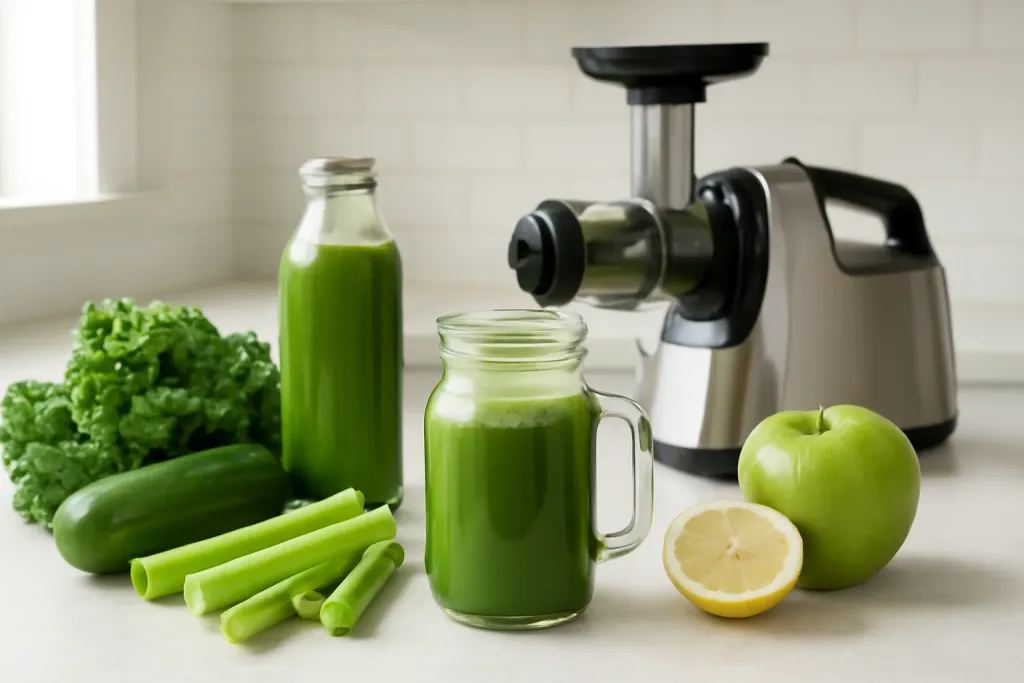
What a Masticating Juicer Is
If you are asking are masticating juicers worth it, it helps to start with the basics. A masticating juicer is a slow juicer that uses an auger to crush and press produce instead of spinning it quickly. In everyday terms, that means it is built to handle leafy greens, firmer vegetables, and some fruits in a steady, controlled way.
For many home users, the appeal is simple: a masticating machine often looks like a better fit for people who want to juice more often, use a wider range of produce, and spend less time fighting with prep and cleanup than they would with larger, more aggressive machines.
That said, the term itself can be confusing. Not every slow juicer works the same way, and not every kitchen needs one. The real question is less about the label and more about how the machine fits your habits, your countertop space, and how much effort you want to put into making juice at home.
Why Shoppers Consider the Upgrade
People usually look at masticating juicers when they want more than an occasional glass of juice. If you are making green juice, celery juice, or blends that include herbs and leafy produce, the slower style can feel more practical than a basic centrifugal model. It is also common for shoppers to compare these juicers when they want a machine that seems more versatile for regular use.
Another reason is recipe flexibility. A home juicing routine often becomes easier when you can work with ingredients like kale, parsley, cucumber, celery, apples, pears, ginger, and citrus without constantly wondering whether the machine can handle the mix. For beginners, that kind of flexibility can matter more than flashy features.
Some shoppers also like the idea of building a juicing setup that includes storage containers, prep tools, and a few simple recipes they can repeat during the week. In that kind of routine, a masticating juicer may feel less like a novelty and more like a kitchen appliance that earns its place over time.
The Main Benefits People Look For
When people ask whether are masticating juicers worth it, they are usually weighing a few practical advantages. One of the biggest is the ability to process produce slowly and deliberately, which can be appealing if you care about making juice with softer leafy ingredients or if you prefer a machine that does not feel rushed.
- Better fit for leafy greens: Many buyers choose slow juicers because they want a smoother path for kale, spinach, herbs, and similar ingredients.
- Less dependence on constant feeding: The slower pace can make it easier to pause, adjust, and use a more measured prep routine.
- Useful for everyday recipes: Green juice, cucumber-apple blends, ginger shots, and simple vegetable mixes are common reasons to choose this style.
- Potentially more storage-friendly output: Some people like juicing in batches and storing the result in airtight containers for short-term refrigeration.
For a beginner, that combination can be appealing because it supports a calmer workflow. Instead of trying to force a complicated recipe through a machine that prefers large, hard chunks, you can build a routine around easier prep, steadier juicing, and consistent cleanup habits.
Still, the benefits are most meaningful when they align with how you actually cook. If you rarely make juice, even a well-designed masticating model may not feel essential.
Tradeoffs to Consider Before Buying
The biggest reason not everyone buys a masticating juicer is that the category often comes with tradeoffs. The most obvious one is time. Slower processing is part of the design, so if your main goal is to make juice as fast as possible on a busy morning, a masticating model may not feel like the easiest answer.
There is also the matter of prep. Many juicers work best when produce is cut into manageable pieces, and that means extra chopping before you start. For some households, that is a small inconvenience. For others, it is enough to make fresh juice feel less realistic on weekdays.
Cleaning is another practical factor. Even when parts are straightforward, any juicer adds another task to the kitchen routine. If you want a low-maintenance setup, it is smart to think about how many pieces need rinsing, how much counter space the machine uses, and whether the storage footprint fits your kitchen.
Finally, cost matters. Without making assumptions about any specific model, it is fair to say that masticating juicers are often compared with cheaper alternatives. If you only plan to juice occasionally, the premium may be hard to justify. If you will use it weekly or more, the calculation may look different.
Browse our recommended products
Our featured picks refresh periodically. While we update them, our editorial guides can help you find the right pick.
See our guidesWho Is Most Likely to Use One
A masticating juicer tends to make the most sense for people who have a clear routine in mind. If you want to make green juices several times a week, try simple vegetable-forward blends, or prepare juice in batches for short-term storage, this style can fit naturally into the process.
It can also work well for beginners who are building a healthier home beverage habit without jumping into complicated equipment. A single juicer, a basic cutting board, a few reusable containers, and a handful of repeatable recipes is often enough to get started. That matters because the easiest routine is usually the one people stick with.
On the other hand, if your kitchen habits are more casual, a masticating machine may be more appliance than you need. If you mainly want the occasional orange juice or one-off experiment with celery, a different juicer style could be enough. The question is not whether slow juicers are good in the abstract. It is whether the machine will be used often enough to justify its role in your kitchen.
How It Fits with Beginner Recipes
One reason slow juicers stay popular with home users is that they fit simple recipes well. If you are new to juicing, start with combinations that are easy to prep and easy to repeat. A green juice might use cucumber, celery, apple, lemon, and a small amount of ginger. A smoothie setup may use spinach, banana, yogurt or a dairy-free base, and a handful of frozen fruit.
That kind of routine is practical because it keeps the learning curve low. You do not need a long ingredient list or advanced technique. Instead, you can focus on a few dependable combinations and adjust based on taste and texture. For many households, that simplicity is the real value of owning a juicer in the first place.
Storage also becomes part of the routine. If you plan to juice ahead of time, use clean containers, label them if needed, and keep your ingredients organized so prep stays manageable. A machine only feels worth the price if it supports a routine that works after the novelty wears off.
In that sense, the best recipe strategy is usually not to chase complexity. It is to choose a juicer that makes it easier to keep the habit going on ordinary days.
How to Decide If It Is Worth It
The most useful way to answer are masticating juicers worth it is to compare the machine against your real habits. Ask how often you expect to juice, what ingredients you will use most, how much prep you are willing to do, and where the appliance will live when it is not in use.
- Choose one if: you want to juice regularly, like leafy greens, and are comfortable with a slower workflow.
- Choose one if: you want to make simple green juice or vegetable blends as part of a repeatable home routine.
- Think twice if: you mainly want speed, minimal prep, or a machine you will use only once in a while.
- Think twice if: countertop space and cleanup are already a challenge in your kitchen.
The best purchase is usually the one that matches your actual use case. A more expensive appliance can be worthwhile when it helps you cook or drink at home more often. But if it adds friction, it may end up tucked away unused.
A good rule for beginners is to buy around your habits, not around the idea of being a juicer person. If you already know you like simple produce-heavy drinks, a masticating juicer may be a sensible step. If you are still testing the waters, a smaller commitment may make more sense.
Bottom Line
So, are masticating juicers worth it? For the right shopper, yes. They can be a practical choice for people who want to make juice regularly, use leafy greens and vegetables, and build a simple home routine around fresh drinks and beginner-friendly recipes.
They are less compelling if you want the fastest possible workflow, the least cleanup, or a machine you will only use occasionally. In other words, the value is not just in the appliance itself. It is in how often you will use it and whether it fits the way you already live.
If your goal is to make home juicing easier to repeat, a masticating juicer can be a solid fit. If your goal is to try juicing once in a while, the price and effort may be harder to justify. That balance is what makes the decision practical rather than universal.