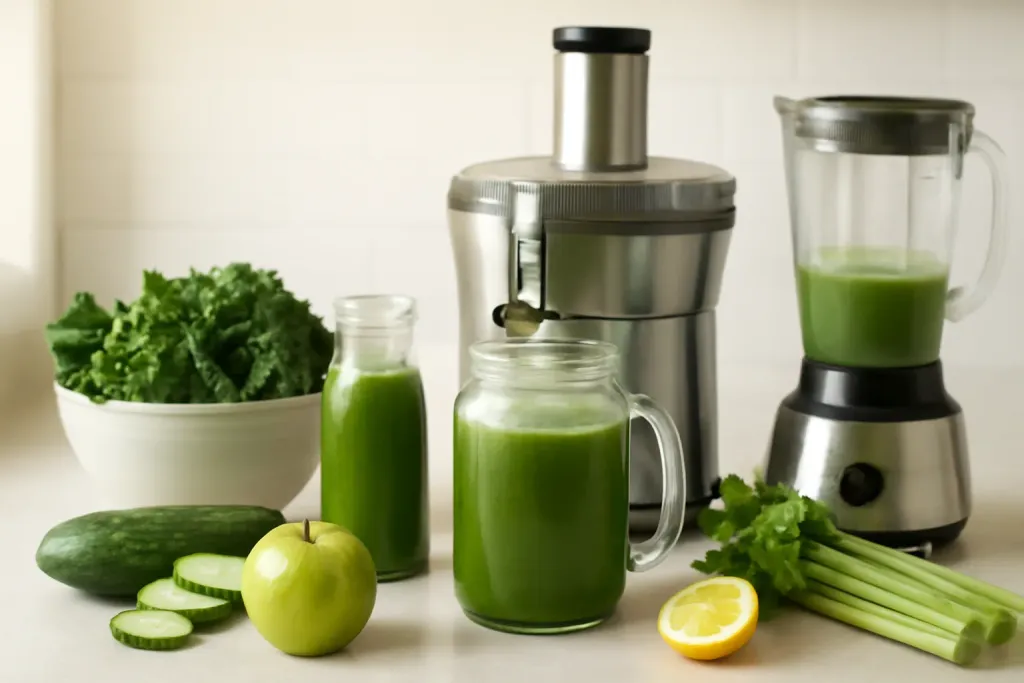
Start Simple and Repeatable
One of the most common beginner juicing mistakes is trying to make a complicated recipe before learning the basics. A long ingredient list can make it harder to understand flavor, texture, and cleanup. It can also make it harder to repeat a recipe later, which matters when you want a routine that actually fits your kitchen life.
For juicing, begin with a short list of familiar ingredients such as cucumber, apple, lemon, ginger, or celery. For smoothies, keep the base straightforward with banana, spinach, berries, yogurt or a milk alternative, and just enough liquid to help everything blend. Simple recipes make it easier to notice what each ingredient contributes without everything getting lost in the mix.
Starting simple also reduces waste. When you are learning, it is easier to adjust one ingredient at a time than to troubleshoot a crowded recipe with too many moving parts. A basic cucumber-apple juice or banana-spinach smoothie can teach you more than a formula packed with extras. Once you know which ingredients you enjoy most, you can add herbs, greens, citrus, seeds, or different textures in small steps.
This approach is especially useful for beginner-friendly green juice and smoothie recipes. Instead of chasing a “perfect” drink on day one, focus on building a few reliable combinations you can make again without guesswork. That is usually the fastest way to avoid common beginner juicing mistakes and build confidence.
Choose Equipment That Matches Your Goal
Another common beginner juicing mistake is assuming one machine will handle every recipe the same way. Juicers and blenders do different jobs. A juicer separates liquid from fiber, while a blender keeps the whole ingredient in the drink. That difference matters when you are deciding whether you want juice, a smoothie, or a thicker blended green drink.
If you want a lighter drink with a smoother texture, a juicer makes sense. If you want more body and a fiber-rich drink, a blender is usually the better fit. Beginners often buy equipment based on a single recipe idea, then realize the machine does not match what they actually make most often. Before you choose, think about your routine, how much cleanup you are willing to do, and how much counter space or storage space you have.
It also helps to consider simplicity. A machine with easy assembly, clearly labeled parts, and straightforward cleanup is often more useful than a feature-heavy model you avoid using. If a juicer or blender feels awkward to store or difficult to set up, it may end up sitting unused. The best beginner setup is usually the one you can use regularly without turning breakfast into a project.
For shoppers looking at home juicing and blending equipment, the main question is not which machine looks most impressive. It is which one fits the recipes you will make, the space you have, and the amount of effort you are realistically willing to put into cleanup.
Don’t Overload the Machine
Many beginners feed produce too quickly or pack the machine too tightly. That can slow the process, create jams, and make cleanup more annoying. It can also lead to uneven results, especially with fibrous ingredients that need a little more time and space to process.
A steadier pace usually works better. Cut produce into manageable pieces and follow the size guidance in the manual. When juicing, alternating softer ingredients with firmer ones can help the machine process more smoothly. When blending, start with enough liquid and leave room for the ingredients to move. A jar packed to the top is more likely to stall or leave uneven chunks behind.
This matters with beginner smoothie recipes because thick mixtures can be difficult to blend if the jar is overloaded from the start. It also matters with green juice, where leafy greens, celery, and cucumber can bunch up if they are added all at once. Feeding ingredients gradually gives the machine time to work and makes it easier to spot a problem before it becomes a bigger one.
Stopping briefly to check the texture can help too. A short pause is often better than pushing the machine too hard. When you are learning how your equipment behaves, moderation tends to work better than force.
Prep Produce Correctly
Skipping prep is one of the most common beginner juicing mistakes because it seems faster at first. In practice, not washing, trimming, peeling, or cutting produce properly can create avoidable problems. Dirt and debris can affect taste and cleanup, and some peels, cores, pits, and large seeds are not ideal for most beginner setups.
Wash produce thoroughly before use and trim away parts that should not go into the machine. Remove thick rinds, hard pits, and damaged sections. Cut larger fruits and vegetables into pieces that fit your feed chute or blender jar comfortably. If you are planning several juices or smoothies, prep ahead when you can. Washing and chopping ingredients in advance can make the difference between actually using them and letting them sit in the refrigerator until they spoil.
Not every ingredient needs the same treatment. Tender greens may need only a rinse and a rough chop, while firmer produce usually benefits from more detailed cutting. Careful prep can also improve consistency from one batch to the next, which helps when you are trying to figure out whether a recipe worked because of the ingredients or because of how they were prepared.
Produce prep is also a practical way to control flavor and texture before anything reaches the machine. Removing bruised spots, excess peel, or overly woody stems can make a noticeable difference in the finished drink. It is not about being fussy; it is about making the process more predictable.
Browse our recommended products
Our featured picks refresh periodically. While we update them, our editorial guides can help you find the right pick.
See our guidesBalance Flavor and Texture
Beginners sometimes expect a juice or smoothie to taste good simply because the ingredient list looks healthy, but flavor balance is one of the most overlooked common beginner juicing mistakes. Too much bitterness from greens, too much sharpness from citrus, or too much sweetness from fruit can throw off the whole drink.
A simple way to build better flavor is to think in layers. Start with a neutral base such as cucumber, apple, banana, or pear. Add stronger ingredients like ginger, lemon, kale, or turmeric in small amounts. Then taste and adjust gradually. This makes it easier to create a drink that feels balanced rather than one-note, and it keeps you from overcorrecting too quickly if the first blend is not what you expected.
Texture matters too, especially with smoothies. If the drink is too thick, add liquid a little at a time. If it is too thin, add frozen fruit, oats, yogurt, seeds, or leafy greens depending on the recipe. The goal is not to force a perfect result on the first try. The goal is to learn how small changes affect the final drink.
When making green drinks, a little structure goes a long way. Mild ingredients can soften stronger flavors, while acidic ingredients can brighten a bland blend. If a drink tastes flat, a small amount of lemon or ginger may help more than simply adding extra fruit. If it tastes too intense, a little more cucumber, banana, or liquid may bring it back into balance.
Plan for Storage and Leftovers
A lot of beginners are surprised by how much produce gets used up in the process. One of the common beginner juicing mistakes is not planning for leftovers, which can lead to wilted greens, cut fruit that spoils quickly, or pulp that gets tossed without a plan. Better storage habits make juicing and smoothie-making easier to maintain.
Store washed produce properly so it stays fresh longer, and keep ingredients organized by recipe or use. If you prep multiple servings at once, label containers when helpful and keep them in the refrigerator according to the needs of the ingredients. For smoothies, freezing ripe bananas, berries, or chopped greens can be an easy way to reduce waste and make future blending faster. A freezer bag of ready-to-go ingredients is especially helpful on busy mornings.
Leftover pulp can sometimes be added to soups, baked goods, or compost, depending on your routine. The point is to think beyond a single glass. Beginners who plan storage and leftovers usually stick with the habit longer because the kitchen feels more manageable. They are also less likely to feel discouraged when they realize juicing or blending is not just about the drink itself, but also about what happens before and after.
Good storage habits also help in a practical way: fresh ingredients taste better when used while still in good condition, and organized containers make it easier to see what needs to be used first. That small amount of planning can prevent wasted produce later.
Build a Routine You Can Keep
Another common beginner juicing mistake is trying to make the process more ambitious than it needs to be. If juicing feels like a major project, it becomes harder to keep up. A realistic routine is usually simpler: a short ingredient list, a machine that fits your space, and a cleanup plan you can repeat without much effort.
Think about when you are most likely to use the machine. Some people do better with a morning smoothie, while others prefer making juice on weekends and storing ingredients in advance. There is no single best schedule. The right routine is the one that matches your home, your time, and your willingness to clean parts afterward.
It can also help to keep a few staple ingredients on hand. Apples, bananas, cucumbers, spinach, lemons, and ginger are easy for many beginners to work with, but you can choose other basics that fit your taste. Repetition is not boring when it removes friction. In juicing and blending, convenience often leads to consistency.
Cleanup is part of the routine too. If washing parts feels overwhelming, that is often a sign that the process is too complicated for everyday use. Keep a brush, bowl, or drying space nearby if it helps, and rinse parts soon after use when possible. The less time a machine sits uncleaned, the less likely the job will feel bigger than it is.
Make Small Adjustments and Learn
One of the best ways to avoid common beginner juicing mistakes is to treat each batch as a small experiment. That does not mean keeping complicated notes or chasing perfect results. It simply means noticing what changed when you adjusted one ingredient, one ratio, or one step.
If a smoothie was too thick, think about whether it needed more liquid, fewer frozen items, or a different base. If a juice tasted too sharp, consider whether the lemon, ginger, or greens should be reduced next time. Small adjustments are more useful than dramatic overhauls because they help you isolate the cause of a result. That is especially helpful if you want repeatable green juice and smoothie recipes instead of one-off blends that are hard to recreate.
Over time, this approach also makes shopping and prep easier. Once you know which ingredients you use most often, you can buy those first and keep a few backups on hand. That reduces waste, saves time, and lowers the chance that a recipe will fail simply because something important was missing.
Most importantly, small adjustments make the process feel manageable. The goal is not to master juicing or blending all at once. The goal is to create a home routine that is simple enough to repeat. When beginners focus on one practical change at a time, they usually make fewer mistakes and get more value from the equipment and ingredients they already have.