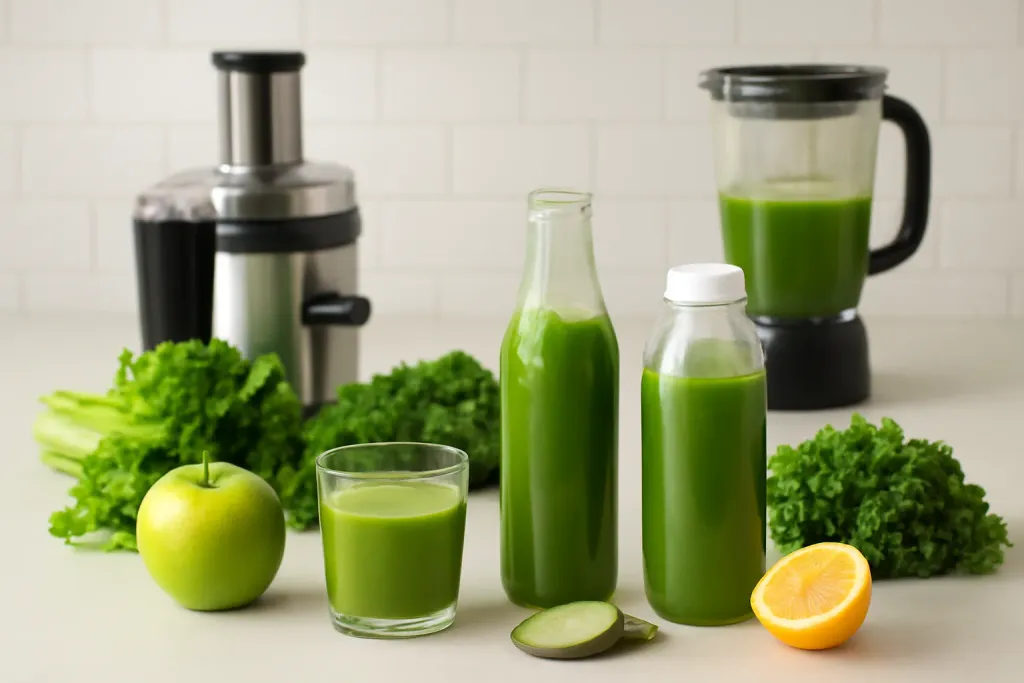
Glass vs. Plastic Juice Bottles: The Basic Choice
When comparing glass vs plastic juice bottles, the main question is not which material is universally best, but which one fits the way you make, store, and carry juice or smoothies at home. For many kitchen routines, the right bottle depends on whether you care most about weight, convenience, durability, or how the bottle fits into a fridge, lunch bag, or prep container setup.
Glass bottles are often chosen for a more rigid feel and a clear view of what is inside. Plastic bottles are often chosen for lighter weight and easier portability. Both can work well for beginner-friendly green juice and smoothie routines, especially when you are portioning drinks after a juicer or blender session.
Because this is a storage decision rather than a recipe decision, it helps to think about your habits first. If you batch a few servings at a time, stack containers in the refrigerator, or want something easy to carry to work or school, your priorities may differ from someone who mostly stores short-term drinks at home. In that sense, glass vs plastic juice bottles is less about trend and more about fit.
How They Differ in Daily Use
Glass and plastic each bring practical trade-offs to a home juicing setup. Glass is heavier and less forgiving if dropped, but it is easy to see through and usually feels sturdy on a counter or in the refrigerator. Plastic is lighter and often easier for everyday carrying, but it can be more prone to scratching or clouding over time, depending on the material and how it is washed.
For juice made in a countertop juicer, the bottle usually serves as a storage step rather than the main event. That means ease of pouring, fridge fit, and lid quality matter as much as the container itself. A bottle with a narrow opening may pour neatly but be harder to clean by hand. A wider opening may be easier to wash and dry, especially if you rotate between juices, smoothies, and cold brew-style beverages.
If you are building a simple home beverage system, consider the path from blender or juicer to refrigerator to glass. A bottle that is comfortable to fill and seal can save time on busy mornings. The best choice is often the one that makes repeat use feel straightforward.
Food Storage Considerations for Juices and Smoothies
For juice storage, the bottle needs to support your usual timing and handling habits. Freshly made juice is commonly stored in the refrigerator for short periods, so a container that seals well and fits cold storage neatly is useful. Smoothies may be thicker and more likely to leave residue, which makes opening size and cleaning access especially important.
Glass bottles can be a strong choice when you want a more inert-feeling container for cold storage and a straightforward way to inspect contents. Plastic bottles can be convenient when you want less weight and less concern about carrying several servings at once. For either material, the lid matters. A good seal helps reduce spills and makes the bottle more practical for daily prep.
Think also about how your juice routine works with leftovers. If you make a green juice in the morning and want to save an extra portion, a bottle that closes securely and fits well in the fridge is more useful than one that looks attractive but is awkward to store. For beginner-friendly recipes, practical storage usually beats decorative packaging.
Cleaning and Maintenance
Cleaning is one of the biggest factors in the glass vs plastic juice bottles decision. Glass is generally simple to rinse and may be less likely to hold onto odors from strong ingredients like ginger, citrus, or leafy greens. Plastic can also clean up well, but some people prefer to reserve it for shorter storage cycles because it may show wear more quickly with frequent use.
If you wash bottles by hand, the shape of the opening matters a great deal. A bottle that is too narrow can be harder to reach with a brush, especially after a thick smoothie. If you use a dishwasher, check whether the bottle and lid are meant for that type of cleaning. Even without discussing specific brand features, it is wise to treat the lid and seal as part of the maintenance routine, not an afterthought.
Drying is also important. A bottle that dries fully between uses is easier to keep in rotation. This is one reason some home users keep a mix of bottle sizes: one for immediate sipping, one for storage, and one for the next batch. The easier the bottle is to clean, the more likely it is to stay in regular use.
Browse our recommended products
Our featured picks refresh periodically. While we update them, our editorial guides can help you find the right pick.
See our guidesPortability, Breakage, and Everyday Handling
Portability is often where plastic bottles have a clear convenience advantage. If you pack juice or smoothie servings in a lunch tote, gym bag, or commuter backpack, lighter containers are easier to carry. This can matter even more when you are taking multiple servings or pairing a drink with snacks, fruit, or a small meal prep container.
Glass bottles, by contrast, may be better for home use where breakage risk is lower and weight is less of a concern. They can feel reassuring on a shelf or inside the refrigerator, but they are not always the easiest option for active days. If you do choose glass, careful handling and appropriate placement become part of the routine.
For many people, the answer is not either-or. A kitchen can use glass for at-home storage and plastic for grab-and-go days. That hybrid approach can be especially practical for beginners who are still figuring out how often they actually bring drinks outside the house.
What to Look for Before Buying
Before choosing between glass vs plastic juice bottles, look at the basics: capacity, lid style, opening width, shape, and how the bottle fits into your refrigerator shelves or lunch container. A bottle that holds the amount you usually make is more useful than one with a clever design that does not match your routine.
Capacity should align with your typical serving size. If you usually make one breakfast smoothie or a few ounces of green juice, a small bottle may be enough. If you batch prep several servings, a larger bottle or a set of bottles may be more practical. The bottle shape should also make sense for storage. Tall, narrow bottles can save shelf space, while wider bottles may be easier to fill.
Material choice matters, but so does the closure. A lid that seals securely can help prevent leaks in the refrigerator and during transport. If you are building a home juicing setup from scratch, it can be smart to think of bottles as part of the whole system alongside the juicer, blender, and cleaning tools.
Best Use Cases for Each Material
Glass bottles often make sense for home refrigeration, short-term storage, and situations where you want easy visibility of the contents. They are a natural fit for organized fridge shelves, prep days, and drinks that stay in the kitchen until you are ready to pour.
Plastic bottles often make sense for portability, kid-friendly routines, travel, or days when you want lighter containers. They can also be useful for people who prepare several drinks at once and want to reduce the weight of a packed bag. For smoothie storage, plastic may be easier to carry, while glass may be easier to keep orderly at home.
If you are new to green juices and blended drinks, start with your most common scenario. If most servings are consumed at home, glass may feel easier to live with. If most servings leave the house, plastic may be the more practical default. Many households end up keeping both because each material solves a different problem.
Simple Habits That Make Either Bottle Work Better
Good bottle habits matter more than brand hype. Fill containers only after they are fully cleaned and dried. Leave enough space if your drink may expand slightly when chilled or if you are storing a thicker smoothie. Labeling the date can also help you keep track of what was made first, especially if you prep more than one recipe at a time.
For beginner-friendly green juice, simple ingredients like cucumber, celery, lemon, apple, spinach, or parsley are common in home routines because they are easy to combine with a juicer and store in a bottle. For smoothies, ingredients like banana, spinach, oats, yogurt, nut butter, or frozen fruit are often blended in batches and then transferred to a bottle or jar for later use. In both cases, the container should support the way you already cook, not force a complicated workflow.
If you want a low-stress setup, keep a consistent storage spot in the refrigerator, use matching lids when possible, and choose bottles you can clean without hesitation. The best glass vs plastic juice bottles choice is the one that helps you keep making drinks regularly instead of creating extra work.