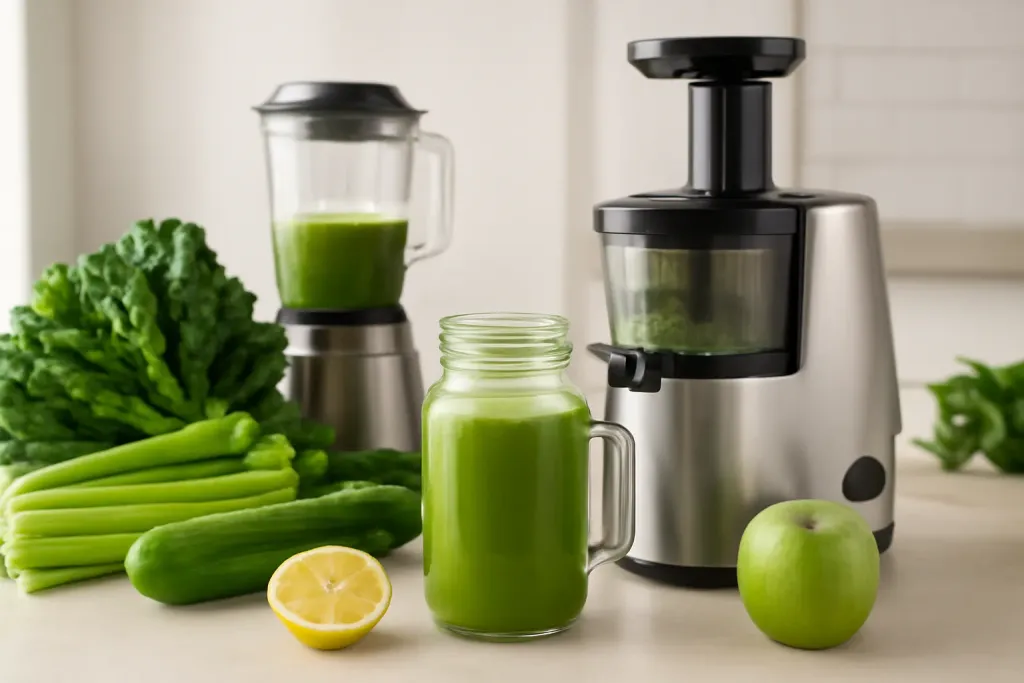
What Matters Most for Leafy Greens
When learning how to choose a juicer for leafy greens, start with the ingredient itself. Greens like spinach, kale, parsley, wheatgrass, romaine, and herbs are light, fibrous, and often stubborn in a juicer. They do not behave like apples or oranges, so the best juicer for greens is usually the one that can move slowly and press efficiently rather than rely on brute force.
The most useful questions are practical ones: how much leafy juice do you want to make, how often will you use the machine, and how much cleanup are you willing to do after each batch? For beginners, a juicer should also be easy to assemble, easy to feed, and simple to wash. A machine that looks impressive but discourages regular use is rarely the right fit.
Another key point is how you plan to build your juice. Leafy greens are often paired with cucumber, celery, green apple, lemon, or ginger to improve flavor and make the process easier. If your routine will rely on mostly greens with a few supporting ingredients, choose a juicer with a design that handles both leafy produce and mixed recipes without frequent clogging.
Slow Masticating vs. Centrifugal Juicers
For leafy greens, the biggest type decision is usually between a slow masticating juicer and a centrifugal juicer. A masticating model uses an auger or similar mechanism to crush and press produce. A centrifugal model grates ingredients quickly and spins them to separate juice from pulp. Both can make juice, but they suit different priorities.
Slow juicers are often the more natural starting point for leafy greens because they are designed to work methodically with fibrous produce. They are also commonly preferred by people who want more control over extraction from smaller leaves and herbs. If your focus is spinach, kale, and similar ingredients, this style often makes the most sense.
Centrifugal juicers are usually faster and can be appealing if you want quick juice from harder produce and do not mind using some extra greens as part of a larger mix. They can be convenient for busy mornings, but leafy greens alone may require more prep and more pushing, depending on the design. If your goal is green juice first and speed second, a slow juicer is usually easier to live with.
In simple terms, choose the juicer style that matches your habits. If you are building a leafy-greens routine, prioritize extraction and versatility over speed. If you are more likely to juice occasionally and want an easier shortcut for mixed produce, a faster machine may still be workable.
Feeding Chute, Pulp Handling, and Anti-Clog Design
Leafy greens can bunch together and wrap around moving parts, so the feeding area matters more than many shoppers expect. A narrow feed chute may require more chopping and more patience. A wider chute can reduce prep time, but it does not automatically mean the juicer is better for greens. What matters is whether the machine can actually pull soft leaves through without constant stopping.
Look for a design that allows you to alternate leafy ingredients with firmer produce. Pushing a small handful of greens through on their own can sometimes be less effective than combining them with cucumber or apple in a reasonable order. Some juicers are easier to use when you feed greens gradually rather than stuffing the chute full at once.
Pulp ejection also deserves attention. A juicer that handles pulp cleanly is often more practical for regular green juice making because fibrous material can build up quickly. If you plan to make larger batches, a model with easy pulp disposal can reduce interruptions. For smaller kitchens, a compact pulp container and straightforward disassembly can make the whole process feel less cumbersome.
Anti-clog features can be helpful, but they should be understood as convenience features rather than guarantees. The most reliable option is still a juicer whose design is well suited to the texture of leafy produce. If you want fewer jams, choose a model that is known for slow pressing, steady feeding, and simple reverse or reset functions if available.
What to Look for in Ease of Cleaning
Cleanup is one of the most important factors in how to choose a juicer for leafy greens because it affects whether you will keep using it. Leafy ingredients can leave fine fibers in screens, strainers, augers, and corners of the juicing chamber. If those parts are hard to reach, even a good juicer can become annoying after a few uses.
Choose a juicer with parts that come apart logically and fit back together without a learning curve. Fewer components can mean less cleanup, though not always less effectiveness. Dishwasher-safe parts can be convenient, but manual rinsing is still often easier if residue starts to dry. A cleaning brush is useful, but it should be seen as one part of the process, not the main solution.
Beginner-friendly cleanup usually means smooth surfaces, fewer hidden crevices, and a screen or filter that does not trap too much pulp. If you are considering a model with a fine mesh screen, remember that better separation can sometimes mean more rinsing. There is often a trade-off between convenience and thorough extraction, so think about which matters more in your kitchen routine.
If your kitchen is small or you plan to juice before work, pick a machine that you will not dread washing. For many home users, the best juicer is the one that can be cleaned quickly enough to become part of an ordinary morning habit.
Browse our recommended products
Our featured picks refresh periodically. While we update them, our editorial guides can help you find the right pick.
See our guidesSize, Noise, and Countertop Fit
Even a juicer that performs well on leafy greens may not be practical if it takes over the counter. Size matters in real kitchens, especially for beginners who are trying to build a simple routine. Before buying, think about where the juicer will live, how easy it is to move, and whether it can stay assembled or needs to be put away after each use.
Compact models are often attractive for small spaces, but very small machines may have smaller feed areas and narrower juice containers. Larger machines may be easier to work with, yet they require more storage and more surface area. The best choice is usually the one that fits your available space without becoming an obstacle.
Noise is another practical consideration. While sound levels are not the only factor, a quieter machine can make early-morning juicing easier to tolerate. This matters especially if you live with others or plan to make juice several times a week. If possible, choose a machine whose design suggests steady operation rather than aggressive high-speed spinning.
It also helps to think about the container setup. A stable juice jug, a pulp bin that does not tip easily, and a base that sits securely on the counter can make daily use more comfortable. These details may sound minor, but they influence whether the machine feels friendly or fussy.
Capacity, Speed, and Batch Habits
When comparing juicers for leafy greens, capacity should match your routine rather than your aspirations. If you only want a single glass in the morning, a smaller machine may be enough. If you like making juice for a few days at a time, you will want a machine that can handle longer sessions without forcing constant stops for pulp emptying or chamber cleaning.
Speed is worth evaluating carefully. Faster does not always mean better for greens, and in some cases a slower machine may be more forgiving with soft leaves and herbs. If you are focused on convenience, the ideal juicer is one that moves at a pace you can live with while still handling your ingredients without frustration.
Batch habits matter because leafy juice is often made in combination with other ingredients. You may want to prep cucumbers, celery, and herbs together, then juice them in a way that keeps the machine flowing. If that sounds like your routine, look for a design that can accept alternating ingredients without constant pulsing or manual nudging.
Think about your long-term pattern, not just your first week. A juicer that seems large enough today may feel undersized once you start making juice for family members, meal prep, or weekly green blends. Choosing with future use in mind can help you avoid replacing the machine too soon.
Features That Help Beginners
Beginners usually do best with machines that reduce guesswork. Clear assembly, straightforward controls, and a sensible feeding process all make a difference. If you are new to juicing greens, a simple one-speed or low-control design may be easier to learn than a machine with many settings that you may never use.
A reverse function can be useful if available, especially when working with stringy ingredients or when a leafy batch starts to slow the machine. A secure locking system is also important because it helps the juicer feel stable during use. Transparent components can be helpful too, since they let you see how pulp and juice are moving through the machine.
Recipe flexibility is another beginner-friendly benefit. Many home users want to start with basic green juice combinations, then branch into smoothies or blended drinks later. If that is part of your plan, consider whether you need a juicer only or a juicer-plus-blender setup for your kitchen. Since juicing and blending solve different tasks, choosing the right tool for each job can save time and reduce disappointment.
Storage also plays a role for beginners. A juicer that nests neatly with its accessories, cords, and cleaning tools is easier to keep ready. If you can take it out quickly and put it away without a hassle, you are more likely to use it consistently.
Simple Buying Checklist for Leafy Greens
Before you buy, use a short checklist to keep the decision grounded. First, confirm that the juicer is well suited to leafy produce and not only to hard fruit. Second, consider whether you want a slower pressing style or a faster machine that works best in mixed recipes. Third, check how easy it is to clean, because that will strongly affect how often you use it.
Next, think about your kitchen layout. Make sure the juicer fits the space where you will actually use it and store it. Then decide how much batch size matters to you. A single-serving routine, a family routine, and weekly prep all call for different priorities.
Finally, keep your recipe plan in mind. If you are starting with simple green juice, look for a machine that handles spinach, kale, celery, cucumber, parsley, and similar ingredients without demanding complex prep. If you expect to experiment with green smoothies as well, remember that a blender may belong in the same conversation, but it does not replace the juicer.
In the end, how to choose a juicer for leafy greens comes down to matching the machine to your actual habits. The best choice is usually the one that makes leafy juicing easy enough to repeat, not just exciting enough to buy.