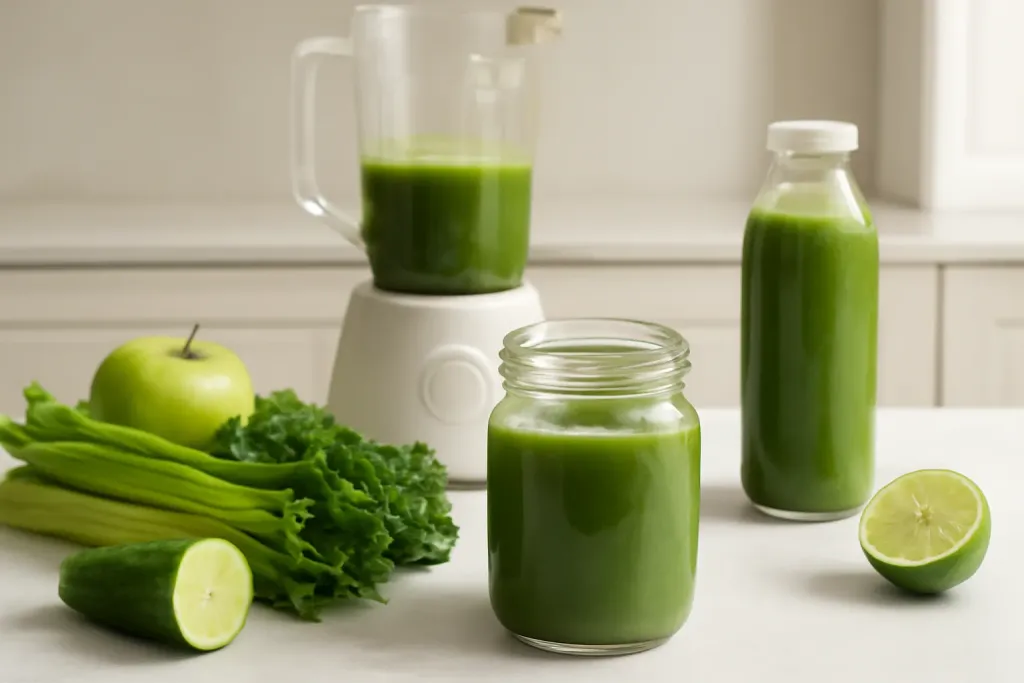
Why Storage Matters for Homemade Green Juice
If you make green juice at home, storage is part of the process, not an afterthought. Fresh juice changes quickly once it is exposed to air, light, heat, and time. That is why learning how to store green juice safely can make a real difference in flavor, color, and overall quality.
Homemade juice does not contain the same processing steps as shelf-stable bottled products. For that reason, it is best treated as a perishable food. The goal is not to make juice last forever, but to slow down oxidation and reduce the chance of spoilage. Good storage habits also help you prep juice in a way that fits a busy schedule, whether you blend in small batches or make enough for the next day.
If you are new to juicing, think about storage before you press the first ingredient. Clean containers, cold temperatures, and smaller portions all support better results. The right storage setup can also help you waste less produce, which matters if you are working with a juicer or blender as part of a regular routine.
Cool the Juice Before Storing It
One of the simplest steps in how to store green juice safely is to cool it as soon as possible after making it. Warm juice should not sit out for long, especially if your kitchen is warm or you are making a large batch. Once the juice is finished, move it into a clean container and place it in the refrigerator promptly.
If you are juicing a large amount, it can help to divide the liquid into smaller containers right away. Smaller portions chill faster than one oversized jar, and faster cooling supports better freshness. Keep the container covered while it chills so the juice is not exposed to air any longer than needed.
Avoid leaving juice on the counter while you clean the juicer, set up your blender, or prep the next ingredients. If you are making breakfast juice or a smoothie-style green drink, organize your routine so storage happens immediately after extraction or blending. In general, the less time the juice spends warm, the better.
Choose the Right Container
The container you use has a big impact on freshness. For most home use, a clean glass jar with a tight-fitting lid is a practical choice. Glass does not absorb odors as easily as some plastics, and it is easy to see how much juice you have left. If you use plastic, choose food-safe containers made for cold storage and make sure the lid seals well.
For how to store green juice safely, the key is minimizing air exposure. A smaller container that leaves less empty space can help slow oxidation. If your jar is only half full, consider pouring the juice into a smaller one. You can also fill containers a bit higher than you would for other liquids, leaving just enough room for expansion if you plan to freeze the juice later.
Make sure the container is clean and dry before use. Leftover soap, food residue, or moisture can affect taste and storage quality. Wide-mouth jars are often easier for pouring and cleaning, while smaller bottles are useful for grab-and-go servings. Choose a shape that fits your fridge and your routine.
Minimize Air and Light Exposure
Air and light are two of the main things that shorten the life of fresh green juice. Oxidation happens when juice is exposed to oxygen, so reducing the amount of air in the container is a practical storage habit. Fill the container as full as safely possible and keep the lid tightly closed after each pour.
Light can also affect stored juice, especially if it sits in a clear container on a bright shelf. Storing juice in the back of the refrigerator, where the temperature is usually more stable, is a better choice than leaving it in the door. If you use a clear jar, you can place it inside an opaque bag or keep it in a covered bin to reduce light exposure.
Once you open a container, close it again right away. Repeated opening and closing introduces more air and more temperature change. If you know you will drink the juice in stages, consider using smaller bottles so you open only what you need. This is one of the most practical habits for anyone trying to figure out how to store green juice safely at home.
Browse our recommended products
Our featured picks refresh periodically. While we update them, our editorial guides can help you find the right pick.
See our guidesRefrigeration Basics for Fresh Juice
Refrigeration is the main storage method for homemade green juice. Keep the juice cold from the moment it goes into the container and continue storing it in the coldest stable part of the refrigerator. A fridge that is overcrowded, opened frequently, or not cooling evenly may make it harder to keep juice in good condition.
As a general home-food rule, fresh juice should be treated as highly perishable. Many people aim to drink it soon after making it, and at minimum within a short window rather than letting it sit for days. Since storage times can vary based on ingredients, preparation method, and refrigerator temperature, use freshness as your guide. If it smells off, looks strange, or tastes unusual, it is better not to drink it.
Try to store green juice separately from strong-smelling foods such as onions or leftovers with bold aromas. Even a tightly sealed jar can pick up odors over time if it sits near pungent items. Keeping your juice in one consistent spot also makes it easier to remember what needs to be used first.
Freezing When You Need More Time
If you do not plan to use the juice soon, freezing can be a useful backup. It will not preserve the exact same texture or flavor as fresh juice, but it can help you avoid waste. Freezing is most helpful when you want to save an extra batch made from produce that you do not want to lose.
Use freezer-safe containers and leave a little headspace because liquids expand as they freeze. Smaller portions usually work better than one large container, since they thaw more evenly and reduce waste. You can freeze in bottles, jars labeled as freezer-safe, or silicone trays if you want easy single servings.
Thaw frozen juice in the refrigerator rather than on the counter. After thawing, give it a gentle shake or stir if the ingredients have separated. For the safest handling, do not refreeze juice that has already thawed. Freezing is not the best option for every batch, but it can be a practical way to extend the life of a homemade green juice you do not want to throw away.
Watch for Signs of Spoilage
Even when you store juice carefully, it can still spoil. Learning the warning signs is part of how to store green juice safely. Before drinking, check the color, smell, and appearance. A sour, fermented, or unusually sharp odor is a sign to stop. Visible mold, bubbling that seems unusual for the recipe, or a slimy texture are also strong reasons to discard it.
Separation is normal in many homemade juices, especially if the recipe includes leafy greens, cucumber, or citrus. Separation alone does not necessarily mean spoilage. However, if the juice looks unusually cloudy, changes texture, or develops an off smell, it is best not to take chances. When in doubt, throw it out.
It helps to date each container when you store it. A simple label on the lid or side of the jar makes it easier to keep track of what was made first. This is especially useful if you prep several bottles at once or alternate between a juicer and a blender for different green drink recipes.
Build a Safe Juicing Routine
The easiest way to keep homemade green juice safe is to make storage part of your regular routine. Wash hands, utensils, cutting boards, and containers before juicing. Rinse produce well, trim damaged sections, and keep raw ingredients away from anything that has already been cooked or served. Good cleanup habits support better storage later.
Plan your batch size around how quickly you will drink the juice. If you only need one serving, make one serving. If you want enough for tomorrow morning, store it in a small sealed container and place it in the coldest part of the fridge right away. For larger prep sessions, label each portion so you can rotate them in the order they were made.
Beginner-friendly green juice and smoothie routines are often easier when storage is simple. Use one container style, one fridge spot, and one labeling method. That keeps the process consistent and reduces the chance that juice gets forgotten at the back of the refrigerator. The more streamlined your setup, the easier it becomes to store green juice safely every time.