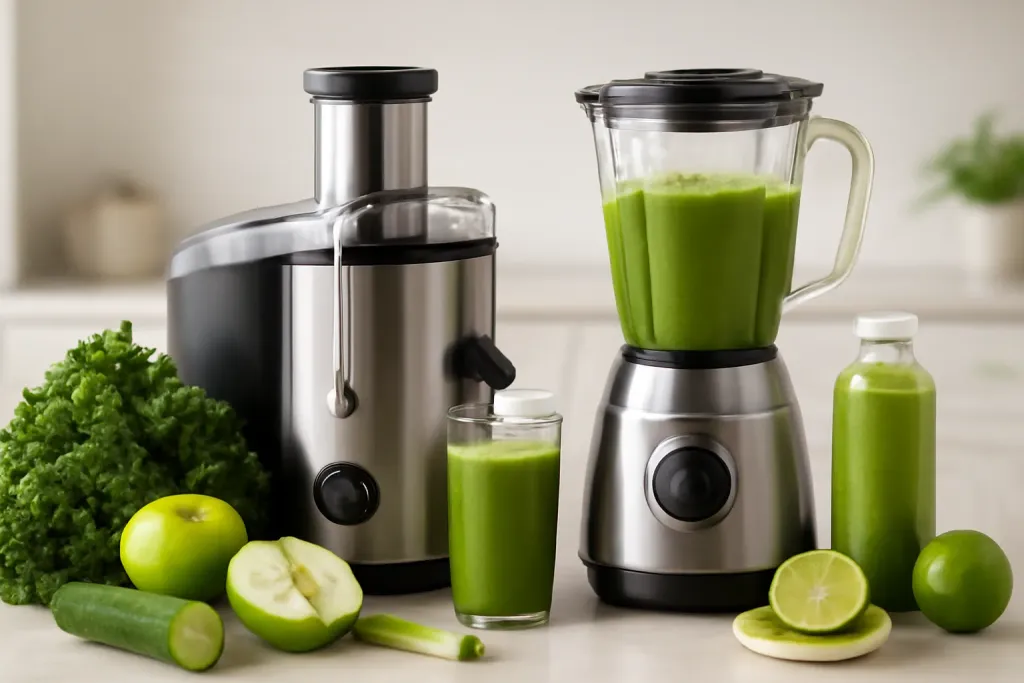
Juicer vs. Blender for Green Drinks: The Basic Difference
When people compare juicer vs blender for green drinks, the main difference comes down to what stays in the glass. A juicer removes most of the pulp and fiber, leaving a smoother, lighter drink. A blender keeps the whole produce base in the cup, so the result is thicker, more filling, and usually closer to a smoothie.
That simple difference affects everything from texture to prep time to cleanup. If you want a drink that feels light and sips easily, juicing is the more direct path. If you want something spoonable or drinkable with more body, blending is usually the better fit. Neither option is automatically better for everyone; the right choice depends on how you like to drink greens, how much cleanup you want, and what ingredients you keep on hand.
For home use, green drinks often mean leafy vegetables like spinach, kale, romaine, celery, cucumber, parsley, or mint. Both appliances can work with these ingredients, but they do different jobs. A juicer separates liquid from the fibrous parts. A blender chops and combines everything into one mixture, which can be adjusted with water, ice, citrus, fruit, seeds, or yogurt alternatives if you want a different texture.
How Juicers Handle Leafy Greens and Vegetables
A juicer is designed to extract liquid from produce and leave the pulp behind. For green drinks, this means you can create a very smooth beverage from ingredients that might otherwise feel fibrous. Leafy greens, cucumber, celery, and herbs are common choices because they fit the purpose of a fresh, lighter drink.
There are different styles of juicers, but the consumer-facing question is usually less about the mechanism and more about routine. Juicing often involves washing, trimming, feeding produce in smaller pieces, and collecting both juice and pulp. That extra step is part of the method, and it is worth considering if you want something quick on busy mornings.
Juicing can be appealing if you prefer a clean texture and do not want a thicker mouthfeel. It can also be useful when you want to combine leafy greens with crisp vegetables and a bit of citrus or apple for balance. Many beginners start with mild greens and familiar add-ins so the flavor stays approachable. A practical approach is to keep the ingredient list short at first: a leafy green, a watery vegetable, and a small amount of fruit or lemon for brightness.
One thing to keep in mind is that juicers create separate pulp, so there is more to discard or repurpose. Some home cooks save the pulp for soups, muffins, veggie patties, or compost, which can make the process feel less wasteful. If you are comparing juicer vs blender for green drinks based on texture and a cleaner sip, the juicer is usually the more specialized tool.
How Blenders Work for Green Drinks and Smoothies
A blender takes the whole ingredient and turns it into a uniform mixture. For green drinks, that means the fiber stays in the cup, which changes the texture and the way the drink feels. Instead of a clear juice, you get something more like a green smoothie or a blended drink with body.
Blenders are often easier for beginners because the process is straightforward: add ingredients, add liquid, blend, and adjust as needed. If the mixture is too thick, you can add more water, ice, or another liquid. If the mixture is too thin, you can add more greens, frozen fruit, or a creamy ingredient. That flexibility makes blending a practical option for households that want a wider range of drink styles from one appliance.
Blending also gives you more room to use ingredient combinations that would be awkward in a juicer. Oats, chia seeds, nut butters, frozen fruit, yogurt alternatives, and tender greens all work well in smoothie-style recipes. For many people, this is the easiest entry point when choosing between juicer vs blender for green drinks, because the blender can handle breakfast-style drinks, snack drinks, and simple green smoothies without requiring a separate machine.
The tradeoff is texture. Some people enjoy the thicker consistency; others prefer a smoother sip. If you are not sure which camp you fall into, it can help to start with a mild smoothie recipe and see whether you want more liquid, more greens, or a different balance on your next try.
Which One Fits Your Routine, Kitchen, and Storage Space
The better choice is often the one you will actually use. A juicer may be a strong match if you want a lighter drink and do not mind a few extra steps. A blender may be the better all-around appliance if you want green drinks plus soups, sauces, or frozen fruit blends from the same machine.
Think about your routine first. If your mornings are busy and you want a quick breakfast drink, a blender may feel more convenient because it is simple to assemble and flexible with ingredients. If you enjoy preparing produce in advance and making a more refined green juice, a juicer may fit that habit better. For some households, the decision is also about counter space and storage. A large appliance that is hard to retrieve can become a shelf decoration instead of a regular tool.
Cleaning matters too. Both appliances need attention after use, but the workflow differs. A blender usually has fewer parts, while a juicer may have more components to wash and reassemble. Beginners often find it helpful to consider cleanup as part of the purchase decision rather than an afterthought.
Storage for ingredients is another practical factor. Green drinks are easier to maintain when you keep washed produce ready to use. Leafy greens, cucumbers, celery, lemons, limes, and apples can be portioned in the refrigerator so the daily process takes less effort. If you want a simple path into green drinks at home, choose the appliance that matches your willingness to prep, wash, and store produce consistently.
Beginner-Friendly Ingredient Ideas for Green Drinks
For new users, the most practical green drinks are usually built from a short list of recognizable ingredients. In a juicer, that might mean spinach or cucumber with celery and a little apple or lemon. In a blender, the same ingredients can become a smoothie with water, ice, or another liquid base. Starting simple makes it easier to learn what you like without creating a long shopping list.
Here are a few easy ingredient patterns:
- Mild and fresh: spinach, cucumber, green apple, lemon, water
- Herb-forward: romaine, parsley, cucumber, lime, water
- Thicker smoothie style: spinach, banana, cucumber, water or milk alternative
- More savory: kale, celery, cucumber, lemon, ginger in a small amount
Flavor balance matters. Greens can taste earthy, grassy, or peppery depending on the variety, so many beginners use a small amount of fruit or citrus to round out the flavor. With a blender, you can also lean on texture instead of sweetness by using frozen fruit or a creamy add-in. With a juicer, you may prefer a cleaner flavor profile that highlights the produce itself.
It also helps to avoid overcomplicating the first few attempts. One green, one watery vegetable, and one flavor-balancing ingredient is enough to learn the process. Once you know your preference, you can branch out into more layered combinations.
Browse our recommended products
Our featured picks refresh periodically. While we update them, our editorial guides can help you find the right pick.
See our guidesSimple Green Juice and Green Smoothie Starting Points
If you are comparing juicer vs blender for green drinks, it can help to think in recipes rather than in appliances alone. A juicer recipe and a blender recipe may share ingredients, but the method changes the final result.
Simple green juice idea: Blend together none of the solids; instead, juice spinach, cucumber, celery, and a small piece of apple with a squeeze of lemon. This produces a lighter, smoother drink with a crisp profile. If the flavor is too intense, adjust the balance by adding more cucumber or apple next time.
Simple green smoothie idea: Blend spinach, cucumber, banana, and water until smooth. If you want a thicker texture, use less liquid. If you want a thinner drink, add more water. This version keeps the whole produce base and works well when you want something more filling.
More vegetable-forward smoothie idea: Blend kale, cucumber, lemon juice, ginger, and a small portion of frozen fruit. The frozen fruit helps with texture and flavor, while the greens stay central. If your blender has trouble with tougher leaves, add liquid first and process in stages.
These recipes are intentionally simple because they are easier to repeat. Once you find a formula you like, you can tweak one ingredient at a time. That approach is especially useful for beginners deciding whether juicer vs blender for green drinks matches their taste and routine better.
Prep, Cleanup, and Storage Tips That Make Green Drinks Easier
Good routine design matters as much as the appliance itself. If you want green drinks to become a regular habit, reduce friction wherever possible. Wash and dry greens when you bring them home, then store them in containers or produce bags that keep them ready for use. Cut cucumbers and celery into manageable pieces so you can grab and go.
For juicing, batch prep can be especially helpful. Pre-washing and trimming produce makes the actual juicing step shorter. Because juicers separate pulp, it is also useful to have a plan for the pulp before you start. A container in the fridge or freezer can buy you time if you want to reuse it later in other recipes.
For blending, portioning can be equally helpful. You can make small freezer packs with greens, fruit, and other smoothie ingredients, then add liquid when it is time to blend. This can streamline mornings and reduce decision fatigue. If you make drinks ahead of time, store them in sealed containers and remember that texture can change as they sit. A quick shake or stir may help, but freshly made is usually the easiest format for both juiced and blended green drinks.
Cleanup is easier when you rinse parts soon after use. Dried greens can cling to containers and lids, so a prompt rinse usually saves time later. For shoppers choosing between appliances, day-to-day cleanup and storage often matter more than any single recipe.
A Practical Way to Choose Between a Juicer and a Blender
If you are still deciding, the simplest approach is to match the appliance to the drink style you want most often. Choose a juicer if you want a lighter, smoother green drink and are comfortable with the extra prep and cleanup. Choose a blender if you want flexibility, simpler setup, and the option to make green smoothies as well as other blended foods.
For many households, the answer is not either-or in an absolute sense. A blender is often the more versatile starter appliance, while a juicer is the more specialized choice for people who specifically want juice-style drinks. If your goal is to explore green drinks with minimal commitment, a blender is usually easier to integrate into a typical kitchen. If your goal is to make classic juice-style green drinks regularly, a juicer may be the more satisfying match.
In the end, juicer vs blender for green drinks is less about a universal winner and more about your preferred routine. Think about texture, cleanup, counter space, and the kinds of ingredients you already buy. Start with a simple recipe, keep your ingredient list short, and choose the appliance that makes green drinks feel easy enough to repeat.
FAQ
If you are deciding between a juicer and a blender, it helps to ask practical questions before buying. Here are a few common ones that come up for home green drinks.
Some people want the lightest possible sip, while others want a more substantial drink they can use as part of breakfast or a snack. There is no single right answer; the best match is the one that suits your texture preference and your routine.
When in doubt, start with one simple recipe and one appliance. That makes it easier to learn what you like before adding more complexity, more ingredients, or another machine.