Manual vs. Electric Citrus Juicers: The Basic Difference
When comparing manual vs electric citrus juicers, the key difference is simple: manual models rely on your hand or arm strength, while electric models use a motor to spin or press the fruit for you. Both are designed for citrus like lemons, limes, oranges, and grapefruits, but they fit different routines and kitchen styles.
Manual juicers are often preferred for their compact size, simple parts, and easy storage. Electric juicers appeal to people who want faster juicing or who regularly prepare larger amounts of citrus juice. Neither style is automatically better; the right choice depends on how often you juice, how much space you have, and how much cleanup you are willing to do.
For home cooks, the decision also affects how the juicer fits into daily kitchen use. A compact manual press may be ideal for a quick squeeze into tea, salad dressing, or a single smoothie recipe. An electric unit may make more sense when you want several oranges at once for breakfast or when you make pitchers of citrus juice for recipes.
Manual Citrus Juicers: Strengths and Trade-Offs
Manual citrus juicers include reamers, handheld squeezers, press-style tools, and small countertop presses that operate without electricity. Their biggest advantage is simplicity. There is no cord, motor, or control panel, and many versions have only a few washable parts.
These juicers are appealing if you want a low-fuss tool for small jobs. Squeezing one lemon for a vinaigrette or one lime for a drink usually feels straightforward with a manual option. They also tend to be easy to store in a drawer or cabinet, which matters in smaller kitchens.
Manual models can also be a good fit for people who prefer to keep appliance clutter down. If you already own a blender, kettle, toaster, and food storage containers, adding another electric appliance may not be necessary for occasional citrus use. A manual juicer can handle the job without taking up counter space.
The trade-off is effort. If you juice often or work through several fruits at a time, manual squeezing can become repetitive. The amount of effort depends on the design, the fruit size, and how much juice you want, but the basic reality is that you provide the force. That makes manual juicers better for small batches than for regular high-volume use.
Another practical point is consistency. Some manual tools are very direct and efficient, while others require a steadier grip or more hand strength. For shoppers comparing manual vs electric citrus juicers, the manual category is usually best when portability, simplicity, and compact storage matter most.
Electric Citrus Juicers: Strengths and Trade-Offs
Electric citrus juicers reduce the amount of physical work by using a motor to assist the juicing process. They are generally better suited to repeated use and medium to larger batches. If you often prepare citrus juice for breakfast, batch recipes, or drinks for multiple people, an electric model can feel more convenient than a hand-powered tool.
One of the main benefits is speed. Instead of pressing or reaming each fruit by hand, you place the citrus onto the juicing mechanism and let the machine do the work. That can be especially helpful when you are short on time or when you are making citrus juice alongside a morning smoothie routine.
Electric juicers do introduce more complexity. They usually have more parts to assemble, clean, and store than a basic manual tool. They also need counter space and access to an outlet, which may be a drawback in a compact kitchen or dorm-style setup.
Noise is another consideration. Even though citrus juicers are usually quieter than many high-speed blenders, electric models still create motor sound. If you want a very quiet kitchen tool for early mornings or shared spaces, a manual option may be more comfortable.
For buyers comparing manual vs electric citrus juicers, electric models make sense when convenience and volume matter more than minimalism. They are practical for households that juice often, but they may be more appliance than some users need.
Cleanup, Storage, and Counter Space
Cleanup is often one of the biggest factors in deciding between manual and electric citrus juicers. Manual tools usually win on simplicity because they have fewer components and no motor housing. In many cases, you can rinse them quickly after use or place dishwasher-safe parts in the dishwasher if the manufacturer allows it.
Electric juicers usually take more time to clean because they have more pieces and more surfaces where pulp and juice can collect. The exact process varies by design, but more parts typically means more washing and drying. For busy households, that difference can matter as much as juicing speed.
Storage is another practical issue. Manual juicers are often easy to tuck into a drawer, cabinet, or small shelf. Electric juicers, even compact ones, can occupy more space and may be best kept on the counter if used often. If you have limited kitchen storage, a manual citrus juicer can be easier to live with.
Counter space matters for people who already keep several small appliances nearby, such as a blender, coffee maker, or toaster. A juicer that stays out all the time can feel convenient, but only if you actually use it often enough to justify the footprint. If not, a manual model may be the more practical everyday choice.
As you compare manual vs electric citrus juicers, think beyond juicing performance. The best option is usually the one that fits your sink, cabinet space, and cleaning routine without becoming another unused kitchen item.
Browse our recommended products
Our featured picks refresh periodically. While we update them, our editorial guides can help you find the right pick.
See our guidesHow to Choose Based on Your Routine
Your juicing habits should guide the choice more than the label on the box. If you usually juice one or two citrus fruits at a time for drinks, dressings, or quick recipes, a manual juicer may be all you need. It is often the more efficient choice for small, occasional tasks.
If you make citrus juice several times a week, or if your household goes through a lot of lemons, limes, or oranges, an electric juicer may save effort over time. The convenience becomes more noticeable when juicing is part of breakfast prep, weekly batch cooking, or regular beverage prep for multiple people.
Also consider who will actually use the tool. A manual juicer may be more approachable for someone who wants a simple, low-maintenance kitchen gadget. An electric model may be better for users who value speed and do not mind a slightly larger appliance with more parts.
Another way to decide is to match the juicer to the rest of your kitchen habits. If you already use a blender for smoothies and want a separate tool only for citrus, a compact manual press can keep things lean. If you are building a more complete beverage station with blending, ice crushing, and juicing, an electric citrus juicer may fit that setup better.
The main point is that manual vs electric citrus juicers is not a style contest. It is a question of routine, volume, and convenience. Choosing the model that fits how you cook is usually more satisfying than choosing the one that looks more advanced.
Materials, Design, and Durability Considerations
When comparing citrus juicers, it helps to look at materials and design features, not just whether the juicer is manual or electric. Durable materials can matter because citrus juice is acidic and repeated washing can wear down cheaper components over time.
Manual juicers are often made from plastic, stainless steel, aluminum, or a combination of materials. A sturdy handle or base can improve comfort and stability, especially if you juice more than occasionally. For handheld presses, the grip and hinge design can make a noticeable difference in everyday use.
Electric citrus juicers vary more in size and construction. Some are designed for compact home use, while others are built with a heavier base or a more prominent juice collection area. A stable base can help reduce movement during operation, and removable parts can make cleaning easier.
It is also smart to think about wear points. On manual tools, hinges, reamers, and strainers may be the parts you use most. On electric models, moving motor-driven parts and removable containers may see the most use. A design with fewer fragile-looking pieces can be appealing if you want something that feels straightforward and durable.
For home kitchens, the best choice often comes down to a balance of material quality, comfort, and easy maintenance. In the manual vs electric citrus juicers comparison, the design details may matter more than the category itself.
Best Use Cases for Each Type
Manual citrus juicers are usually the best fit for small, quick, and occasional jobs. They work well for squeezing lemon into tea, lime into marinades, or orange into a small batch recipe. They are also convenient for people who want a simple tool that does not require setup.
Electric citrus juicers make more sense when you want to juice larger amounts with less repeated effort. They are a practical option for households that use citrus often, prepare breakfast drinks regularly, or make recipe batches that rely on more than one fruit at a time.
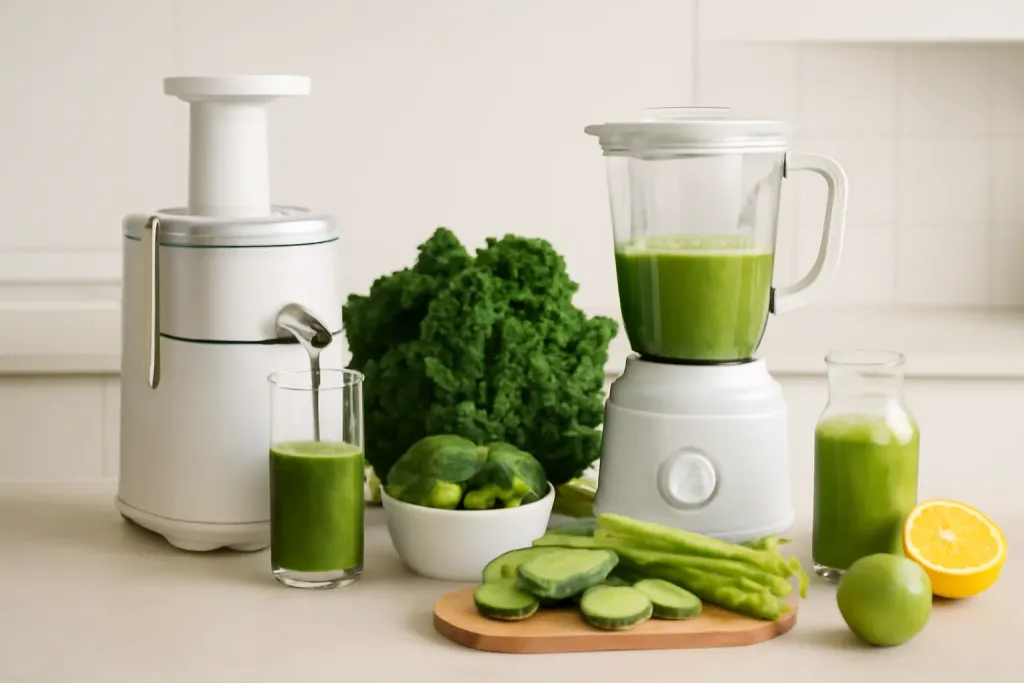
If you are building a beginner-friendly kitchen for green juices and smoothies, it can help to think of citrus juicing as a supporting task rather than the main event. A blender handles leafy greens, soft fruit, and ice, while a citrus juicer handles fresh lemon, lime, or orange juice for flavor balance. In that setup, a manual juicer may be enough if citrus is only an accent ingredient.
For cooks who like to prep ingredients in advance, electric juicers can be appealing because they help move through more fruit at once. That can be useful when you are planning a week of beverage prep or gathering ingredients for multiple recipes.
In short, manual tools are best for light use and minimal storage, while electric models are better for convenience at higher volume. The right answer in manual vs electric citrus juicers depends on how citrus fits into your cooking habits.
A Simple Buying Checklist Before You Choose
Before buying, it helps to ask a few practical questions. How often will you juice citrus? How much counter space can you spare? Do you want the simplest cleanup possible, or is faster juicing more important? Your answers can narrow the choice quickly.
- If you juice only occasionally, consider a manual model.
- If you make larger batches or juice often, look at electric models.
- If storage is tight, prioritize compact tools with fewer parts.
- If cleanup matters most, compare how many removable pieces each model has.
- If you share a kitchen, think about noise and setup convenience.
You should also check the basics like whether parts are easy to rinse, whether the juicer feels stable on the counter, and whether the size matches the citrus you use most often. A tool that handles lemons well may not be as comfortable with larger grapefruits, depending on design.
The best purchase is usually the one that fits your routine without creating extra hassle. For many home cooks, that means choosing between a simple manual press and a more convenient electric juicer based on everyday use rather than features alone.