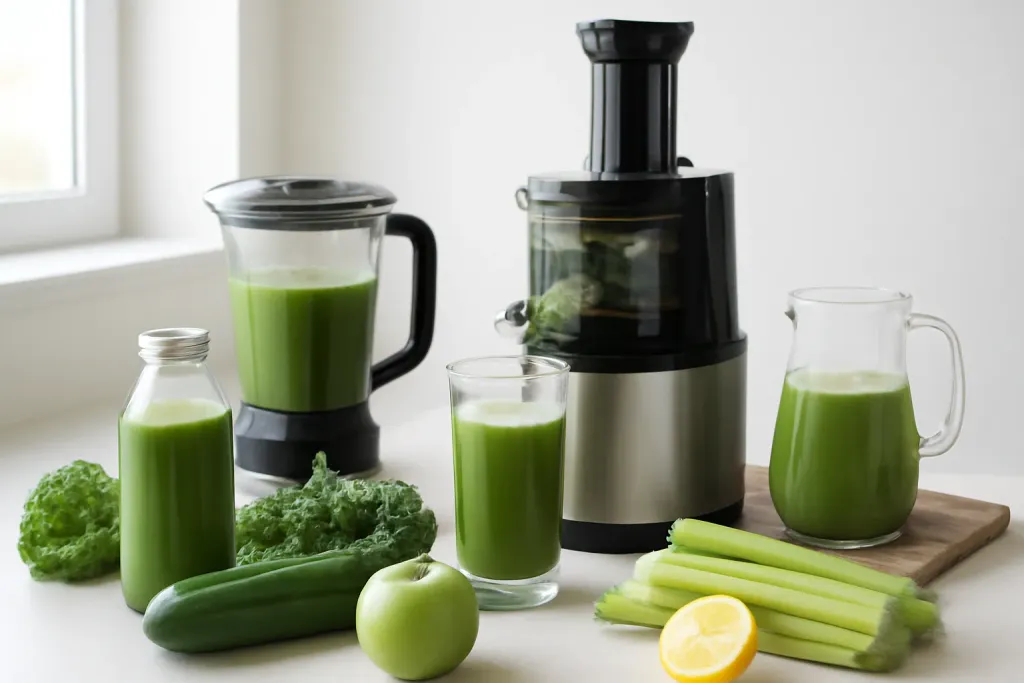
Masticating vs. Centrifugal Juicer: The Basic Difference
If you are comparing a masticating vs centrifugal juicer, the main difference is how each machine turns produce into juice. A masticating juicer uses an auger to slowly crush and press fruits and vegetables. A centrifugal juicer uses a fast spinning blade and mesh basket to separate juice from pulp.
That basic design difference shapes the rest of the buying decision. Masticating models are usually chosen by people who want a slower, more controlled juicing routine. Centrifugal models are usually chosen by people who want quick, simple juicing with minimal prep time.
Neither type is automatically the right choice for every kitchen. The better option depends on how often you juice, what ingredients you use, how much counter space you have, and how much cleanup you are willing to do after each batch.
How Masticating Juicers Work
Masticating juicers, sometimes called slow juicers, use a single auger or a similar pressing mechanism. The machine feeds produce into a narrow chute, breaks it down, and squeezes out juice before sending the dry pulp to a separate container.
This style is often appealing if you like leafy greens, herbs, wheatgrass, or mixed vegetable juices. Because the process is slower and more deliberate, many shoppers also associate it with more versatility for ingredients that can be tricky in a fast juicer.
There are tradeoffs. The feed opening is often narrower, so you may need to cut produce into smaller pieces. That means a little more prep before juicing. The machine may also take longer to process a full pitcher of juice, especially if you are making multiple servings at once.
For buyers who prefer a routine and do not mind a slower pace, this can be a good fit. For someone who wants a quick cup before heading out the door, it may feel less convenient.
How Centrifugal Juicers Work
Centrifugal juicers use a high-speed spinning basket with cutting teeth or blades. As produce is fed into the chute, the spinning motion helps force juice away from the pulp and through a fine screen.
This approach is often attractive for beginners because it is straightforward and fast. Many models are designed for larger chutes, which can reduce chopping and make it easier to juice apples, carrots, celery, and other everyday ingredients.
If your main goal is convenience, this type is worth considering. It can be a practical choice for people who want a simple weekday routine, especially if they are more likely to make juice in short sessions rather than spend time on a slower prep-and-press process.
The tradeoff is that the faster design may be less appealing to people who want to juice a lot of delicate greens or who are especially focused on having a machine built around slow extraction. It is best to think of a centrifugal model as the speed-first option in the masticating vs centrifugal juicer comparison.
What to Compare Before You Buy
When deciding between a masticating vs centrifugal juicer, it helps to focus on practical ownership questions rather than marketing language. The most useful factors are usually how you plan to use the machine and what you are willing to do to keep it running smoothly.
Prep time: Masticating juicers often need more chopping. Centrifugal juicers may let you load larger pieces more quickly.
Juicing pace: Slow juicers move at a measured pace. Fast juicers are better if you want juice in less time.
Ingredient mix: If leafy greens are central to your routine, a masticating model may be more appealing. If you mostly use apples, carrots, citrus, and other everyday produce, a centrifugal model may be enough.
Cleanup: Any juicer needs cleaning, but the number of parts and the screen design can affect how easy that feels after use.
Counter space: If you have a small kitchen, the footprint and storage shape matter as much as the juicing mechanism.
Batch size: Think about whether you make one serving at a time or prepare juice for a family or several days.
It also helps to consider whether you want a machine that encourages daily use or one that only comes out when you have time. The best juicer is often the one you will actually use consistently.
Browse our recommended products
Our featured picks refresh periodically. While we update them, our editorial guides can help you find the right pick.
See our guidesCleanup, Storage, and Kitchen Fit
Cleanup can matter just as much as juicing performance. If a machine feels complicated to disassemble or takes up too much room in the sink, it may become a hassle after the novelty wears off.
Masticating juicers often come with more parts and a more detailed assembly process. That is not necessarily a dealbreaker, but it is worth thinking about if you want a fast wash-and-go routine. Centrifugal juicers can also have screens and pulp bins that need attention, so simple does not always mean effortless.
Storage is another practical issue. Some juicers are tall and awkward to tuck into a cabinet, while others are wide but lower-profile. Before buying, check where you will keep the machine, where the accessories will live, and whether you have a stable countertop spot if you plan to leave it out.
For smaller kitchens, a compact design may matter more than the juicing style itself. If your juicer is easy to access, you may use it more often. If it lives in the back of a cabinet behind other appliances, even a good machine can become inconvenient.
Which One Fits Your Routine Best?
The easiest way to choose is to match the machine to your actual habits. If you value speed, simple setup, and quick cleanup before work or school, a centrifugal juicer is often the more practical pick. It fits better when juice is part of a busy routine.
If you are willing to spend more time on prep and want a slower, more hands-on process, a masticating juicer may be a better match. It can feel more adaptable if you like making green juices, vegetable blends, or larger weekend batches.
Here is a simple rule of thumb:
Choose centrifugal if convenience and speed are your top priorities.
Choose masticating if you care more about slower processing, greens-friendly use, and a methodical routine.
Choose neither if you are unlikely to juice regularly, because even the best machine will not help if it stays boxed up.
For many households, the decision is not about finding a universally superior machine. It is about choosing the juicer that fits your schedule, your ingredients, and your tolerance for cleanup.
Beginner-Friendly Juicing and Smoothie Ideas
If you are new to juicing, it can help to start with straightforward combinations that use ingredients you are already comfortable buying and storing. That keeps the learning curve manageable while you figure out how much prep and cleanup you can tolerate.
For a simple green juice, try celery, cucumber, apple, and a small amount of spinach or parsley. For a brighter everyday juice, use apple, carrot, and ginger. These are approachable starting points because they use common grocery items and do not require unusual ingredients.
If you also make smoothies, remember that juicers and blenders solve different problems. A blender keeps fiber in the drink, which makes it useful for thicker smoothies, frozen fruit blends, and breakfast-style recipes. A juicer separates juice from pulp, which is better when you want a lighter drink and are comfortable storing or discarding the pulp afterward.
Many home kitchens benefit from owning both, but if you are starting with one appliance, think about which routine you will use more often. A juicer is for extraction. A blender is for blending. That distinction matters when comparing countertop tools for everyday use.
A Simple Final Decision Guide
If you are still deciding on a masticating vs centrifugal juicer, start with your most common scenario, not your idealized one. Are you more likely to make juice on a rushed weekday morning, or on a calmer weekend afternoon? Are you more interested in quick apple-carrot combinations, or in a more flexible greens-focused routine?
A centrifugal juicer is usually the more straightforward choice for speed, easy daily use, and less prep. A masticating juicer is usually the more compelling choice for slower, more deliberate juicing and for buyers who expect to use leafy produce often.
For beginners, the safest approach is to buy based on routine, not hype. A machine that matches your kitchen habits will usually feel like a smarter purchase than one that sounds impressive but stays in storage.
If you want the shortest possible answer: buy centrifugal for convenience, buy masticating for versatility and slower juicing. The right choice is the one that fits the way you actually make drinks at home.