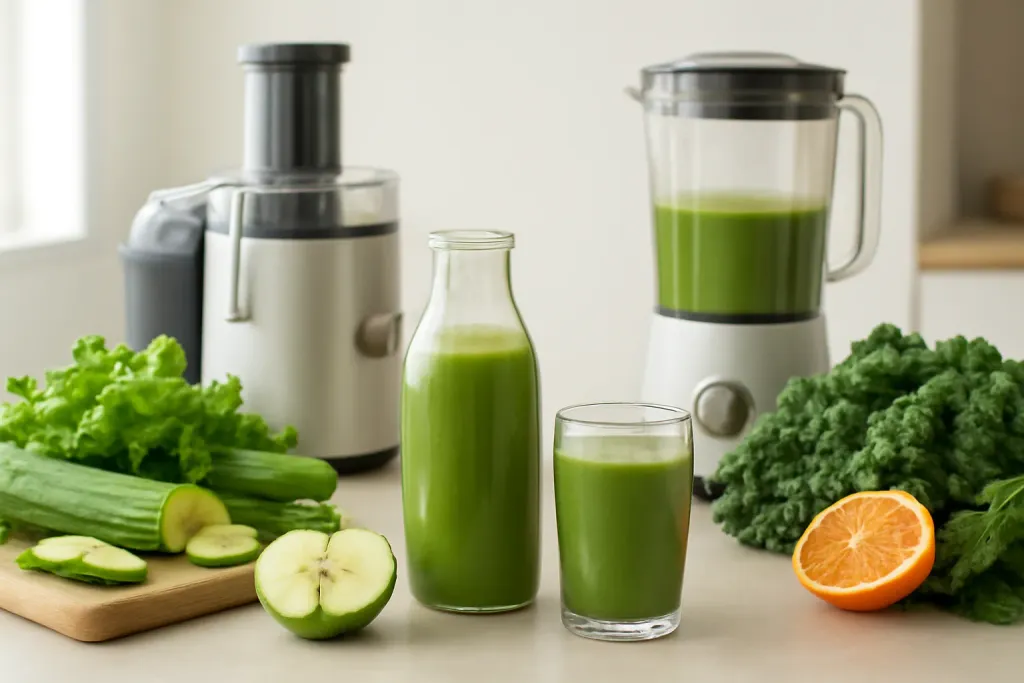
Why Prep Tools Matter Before Juicing
When people think about faster juicing, they often focus on the juicer itself. In practice, the biggest time savings usually come from what happens before the machine starts. The right produce preparation tools for juicing can make washing, trimming, peeling, coring, and chopping feel much more manageable, especially when you are working with a mix of apples, citrus, cucumbers, celery, ginger, carrots, herbs, and leafy greens.
Good prep tools help keep the workflow organized. Instead of stopping to hunt for a knife, swap cutting boards, or struggle with slippery produce, you can move through one station at a time. That matters for beginners, because a simple setup is easier to repeat. It also matters for anyone making juice or smoothies regularly and trying to reduce the amount of cleanup between steps.
A faster prep routine does not need to be elaborate. In many kitchens, a few well-chosen basics do most of the work: a stable cutting board, a sharp knife, a peeler, a citrus tool, a salad spinner, and storage containers. From there, you can add tools that match the produce you use most often. The goal is not to buy everything. The goal is to make each batch easier to start and easier to finish.
Core Tools for a Faster Home Setup
If you are building a simple juicing station, start with the basics. A large cutting board gives you room to sort produce, trim ends, and cut items into juicer-friendly sizes. A sharp chef’s knife or paring knife helps with quick slicing, while a vegetable peeler can speed up prep for produce with skins you prefer to remove. For citrus, a handheld juicer or reamer can be useful if you like to juice lemons or oranges separately before adding them to a blend or juice mix.
A sturdy colander or bowl is useful for rinsing produce in batches. If you wash greens, herbs, berries, or grapes in advance, a salad spinner can help remove excess water so your ingredients are ready to store or use. That is especially helpful when you do not want damp produce sitting in the refrigerator.
Measuring cups and a few prep bowls can also streamline the process. They let you separate ingredients by recipe, keep cut pieces organized, and avoid double handling. For many home juicers, these simple tools do more for speed than specialty gadgets ever will. They support an orderly habit: wash, trim, cut, store, and juice.
It can also help to keep a trash bowl or compost bowl on the counter. Having a place for peels, stems, and cores reduces back-and-forth movement and keeps the cutting area clear. That small detail often makes the work feel faster and less cluttered.
Tools That Make Washing and Drying Easier
Washing produce is one of the most repeated steps in any juicing routine, so tools that simplify it are worth considering. A large colander, a deep bowl, or a sink insert can help you rinse multiple items at once. For leafy greens and herbs, a salad spinner is one of the most practical produce preparation tools for juicing because it moves water off the surface quickly without requiring extra towels or long drain times.
Microfiber towels or clean kitchen towels can be useful for drying firmer produce such as apples, cucumbers, or pears after rinsing. Drying matters because it can make items easier to handle and can help keep cut produce from becoming slippery on the board. A drying rack is another simple option if you often wash produce in batches before storing it.
If you like to prep ingredients ahead of time, try assigning one container to washed items and another to cut items. That keeps the workflow clear and can help prevent mixing wet greens with chopped fruit. For beginners, this small level of organization reduces confusion and makes it more likely that prep gets finished in one session rather than spread across the day.
The main idea is to keep the washing step efficient without overcomplicating it. When rinsing and drying are quick, you are more likely to prep produce consistently, which is often the real key to faster juicing at home.
Cutting, Peeling, and Coring Tools That Save Time
Cutting tools have a direct effect on how quickly you can move from whole produce to juicer-ready pieces. A sharp knife is the foundation, but a few specialized tools can make certain jobs much faster. A swivel peeler or Y-peeler can be helpful for carrots, cucumbers, or apples when you prefer peeled ingredients. A sturdy paring knife can help remove bruised spots, trim stems, and shape produce for feeding into a chute.
For apples and pears, an apple corer can simplify prep if your recipes call for removing the core before juicing or blending. A melon baller or small scoop can be useful for scooping out seeds or soft centers in fruits where that step makes sense. For citrus, a zester and channel tool can be handy if you use peel sparingly for flavor, though many home juicers will only need a basic knife and peeler.
Cut-resistant gloves are worth considering for anyone who wants extra grip while slicing firm produce. They are not required, but they can help some users feel steadier when handling a lot of chopping at once. A blade guard or knife sheath can also make storage safer and keep your most-used knife ready for the next batch.
The best approach is to match the tool to the produce you use most. If your routine is heavy on apples and citrus, prioritize coring and peeling tools. If you rely on cucumbers, celery, and greens, focus on a good board, a sharp knife, and a quick drying method.
Browse our recommended products
Our featured picks refresh periodically. While we update them, our editorial guides can help you find the right pick.
See our guidesPrep Tools for Leafy Greens and Herbs
Leafy greens and herbs can be some of the most time-sensitive ingredients in a home juicing routine. They are light, delicate, and sometimes awkward to rinse and store. That is where a few specific tools can help. A salad spinner is one of the most useful items because it removes water after washing spinach, kale, parsley, cilantro, mint, or similar ingredients. Less water means less dripping, less mess, and less time spent patting ingredients dry.
A herb keeper or small lidded container can help extend the life of fragile bunches once they are washed and trimmed. For juicing or blending, that matters because it makes it easier to grab a ready portion instead of dealing with a bulky bunch each time. Small kitchen shears can also be helpful for snipping herbs and greens into smaller pieces before they go into a storage container or recipe bowl.
If you often make green juices or smoothies, it can be useful to create a greens station in the refrigerator. Keep washed greens in one container and herbs in another, with paper towels if you prefer to absorb extra moisture. Labeling is optional, but it can help when several family members use the same fridge.
The purpose of these tools is not to change the recipe. It is to shorten the number of little steps that get in the way of actually using your produce. When greens are washed, spun, trimmed, and stored neatly, they are much easier to reach for on busy mornings.
Batch Prep and Storage Tools for Busy Weeks
Batch prep can be a major time saver if you juice or blend several times a week. Storage tools help turn a long prep session into a simpler routine later. Clear containers, lidded bowls, and stackable bins make it easier to see what is washed, what is chopped, and what still needs work. Many home users prefer transparent containers because they reduce the chance of forgotten produce hiding in the back of the refrigerator.
Reusable produce bags can help organize smaller items such as lemons, limes, jalapeños, or ginger. Silicone bags, glass containers, and food-safe prep tubs are also common choices for cut fruit and vegetables. If you use a batch-prep system, it helps to group ingredients by recipe rather than by type. For example, place the ingredients for one green juice in a single container and the ingredients for a fruit-forward smoothie in another.
Freezer-safe containers are useful if you like to portion ingredients for later blending. While freezing is not necessary for every household, it can be a practical way to keep some produce from spoiling before you can use it. Just make sure the container size matches your typical portion, since overfilled containers can be awkward to thaw and use.
One of the simplest batch-prep habits is to wash and trim produce on the day you shop, then do the cutting only for the recipes you expect to use soon. That keeps the workload balanced and prevents unnecessary waste. Good storage tools make this easier because they give every ingredient a designated place.
How to Choose the Right Tools for Your Kitchen
Not every kitchen needs the same setup. The best produce preparation tools for juicing depend on what you make most often and how much counter and storage space you have. If your routine centers on leafy greens, herbs, and soft fruit, focus on washing, drying, and storage tools first. If you work with hard produce like carrots, apples, and beets, prioritize a cutting board, a sharp knife, and a peeler or corer.
It is also worth thinking about cleanup. Tools that are easy to wash and store are more likely to be used. A gadget that saves a minute during prep but creates extra parts to clean may not be a real time saver in an everyday kitchen. Simple, sturdy tools often provide the best balance of convenience and reliability.
For beginners, a minimal setup is usually the most practical place to start. That might include a large board, one good knife, a peeler, a colander, a salad spinner, and a few storage containers. Once you know which fruits and vegetables you use most, you can add more specialized tools if they solve a recurring problem.
The best tool is the one that fits your routine. If it helps you wash, trim, cut, and store produce with less friction, it earns its place. If it stays in a drawer, it probably does not.
A Simple Prep Routine You Can Repeat
A repeatable routine is often more valuable than a long list of gadgets. Start by gathering your produce and setting out the tools you actually need. Wash everything in one pass, then dry or spin the ingredients that hold water on the surface. Next, trim stems, remove damaged spots, peel when needed, and cut items to a size that suits your juicer or blender.
As you work, sort ingredients into small bowls or containers. Keep greens together, hard produce together, and citrus or add-ins in their own place. If you are making more than one recipe, label containers or arrange them in the order you plan to use them. That reduces stopping and thinking during the final prep stage.
When the juicing or blending is done, clean the tools while the mess is still fresh. A quick rinse of the board, knife, peeler, and containers keeps the setup ready for next time. Over time, that habit can matter as much as the tools themselves.
The overall goal is simple: make produce prep predictable. Once the routine feels familiar, juicing becomes less of a project and more of a short, manageable kitchen task.